

Most home repairs don't announce themselves. A loose hinge, a stripped screw, a leaking pipe fitting — they show up unannounced and usually at the worst time. Having the right tools already on hand makes the difference between a five-minute fix and a panicked trip to the hardware store.
You don't need a professional workshop to handle the vast majority of household repairs and small projects. What you do need is a small, well-chosen set of hand tools that cover the most common situations. Here's what that kit looks like — and why each piece earns its place.
1. A Good Claw Hammer
This is the foundation of any home toolkit. Look for a 16-oz. steel or fiberglass model with a comfortable grip. The curved claw on the back handles nail removal cleanly, and the weight is balanced enough for light framing tasks. Avoid anything too light — it'll make you work harder — or too heavy, which causes fatigue fast.
2. A Set of Screwdrivers

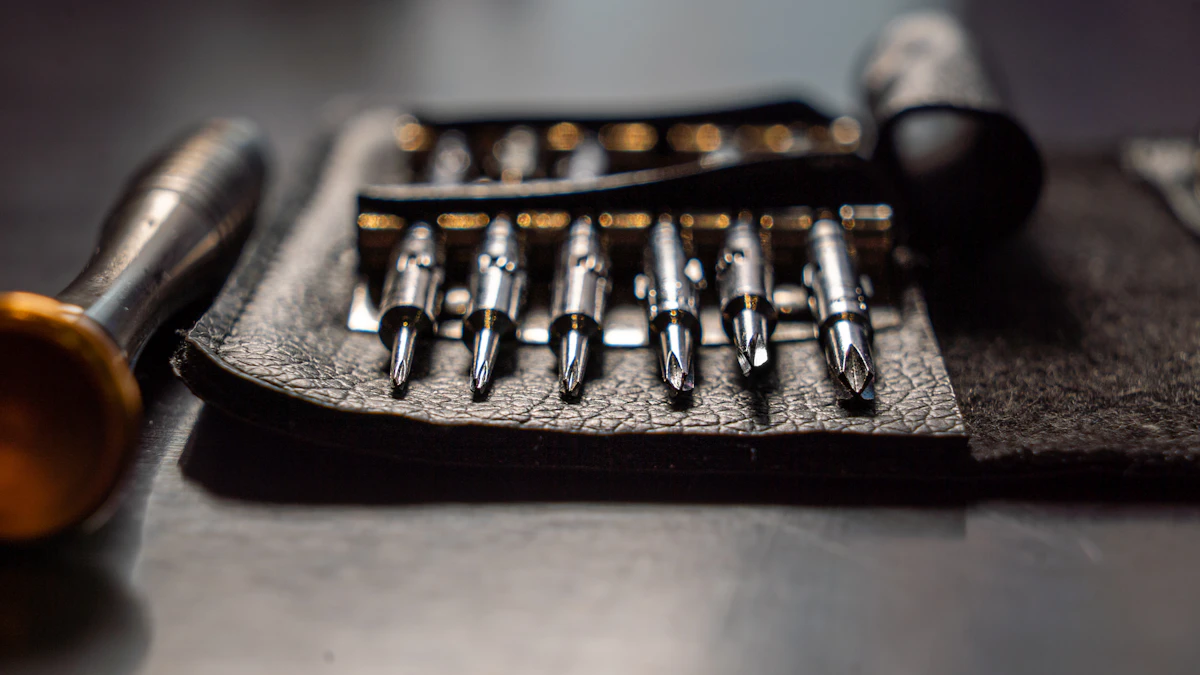
One screwdriver won't cut it. You want at least two Phillips heads (small and medium) and two flat heads. Better yet, pick up a multi-bit set with a magnetic tip — it'll handle virtually every screw head you'll encounter around the house, from furniture assembly to outlet covers.
3. Adjustable Wrench
Also called a crescent wrench, this single tool replaces an entire set of fixed-size wrenches for most everyday tasks. An 8-inch model handles the majority of plumbing and fixture work. Buy one with a comfortable grip and smooth jaw adjustment — cheap ones slip and round off bolt heads.
4. Needle-Nose Pliers
For anything small, tight, or awkward — reaching into junction boxes, bending wire, grabbing a tiny screw that fell into a tight space. Needle-nose pliers are the tool you reach for when your fingers simply can't get there. Get a pair with a side cutter built in and you've also got wire-stripping capability.
5. A Tape Measure
25 feet is the sweet spot for home use — long enough for most rooms, short enough to lock and retract cleanly. Look for a wide blade (1 inch or more) so it stands out without buckling when extended. Measure twice, cut once isn't just a saying; it's the difference between a job done and a job done twice.
6. A Level
Hanging a picture, mounting a shelf, installing a towel bar — all of these look wrong if they're even slightly off. A 24-inch torpedo level is compact enough to store easily and accurate enough for almost every household task. Once you own one, you'll wonder how you managed without it.
7. Utility Knife
Few tools earn their keep as quietly as a utility knife. Opening boxes, scoring drywall, trimming caulk, cutting rope or packaging — it does all of it cleanly and safely when handled correctly. Always snap off the blade to expose a fresh edge before any precision cut, and retract it when not in use.
8. A Stud Finder
Hanging anything heavier than a lightweight picture frame requires finding a stud. Drilling into drywall alone won't hold — studs are the structural support behind the wall surface. A basic magnetic or electronic stud finder takes the guesswork out of it and prevents a lot of frustrating patch-and-redo work.
9. Hand Saw
A power saw is great, but a quality hand saw handles most small cutting tasks without the setup time. Trim pieces, PVC pipe, a small length of lumber — a 15-inch crosscut saw is compact, quiet, and requires no power source. Sharpness matters more than size, so avoid bargain-bin options.
10. A Cordless Drill/Driver

If there's one power tool that belongs on this list, it's a cordless drill. It drives screws faster than any screwdriver, bores holes for everything from wall anchors to cabinet hardware, and handles light tasks that would take 10 times longer by hand. An 18V or 20V model with two batteries keeps you working without interruption.
Build the Kit Gradually
You don't need to buy all ten at once. Start with the hammer, a screwdriver set, and a tape measure — those three cover a surprising number of situations. Add the rest as projects come up. The goal isn't a full workshop; it's being ready for the jobs that can't wait.
Buy the best quality you can afford in each category. With hand tools, the difference between a $10 wrench and a $35 wrench is often the difference between a tool that lasts a decade and one that rounds off a bolt the first time you use it.